
Custom Metal Table Bases: How to Pair Steel Legs with Marble, Quartz & Wood Tops
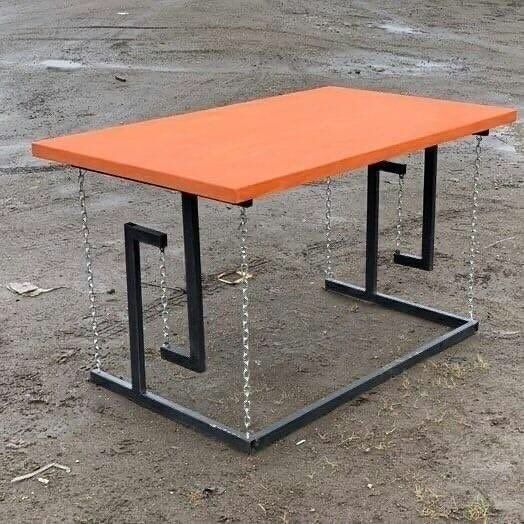
When designing a bespoke dining table, conference table, or kitchen island, the tabletop material—whether natural Calacatta marble, engineered quartz, sintered stone, or live-edge Suar wood—often steals the spotlight. However, the unsung hero that determines structural safety, knee clearance, and long-term durability is the custom metal table base.
A 2.4-meter natural marble slab can weigh over 120 kg. Without an engineered steel subframe and properly distributed weight-bearing points, heavy stone tops can crack or sag under uneven pressure. In this guide, our fabrication engineers explain how to select the right steel base geometry, gauge thickness, fastening system, and leg positioning for any tabletop material.
Table of Contents
- 1. Calculating Tabletop Weight & Structural Load Capacities
- 2. Top Metal Base Geometries: Spider, Trapezoid, U-Frame & X-Legs
- 3. Fastening Techniques: Natural Stone vs. Solid Timber Tops
- 4. Preventing Sagging: Welded Steel Aprons & Hidden Stiffeners
- 5. Leveling Feet & Floor Protection for Heavy Tables
- 6. Custom Table Base Fabrication in Singapore
1. Calculating Tabletop Weight & Structural Load Capacities
Different tabletop materials impose vastly different structural demands on steel legs:
| Tabletop Material | Typical Thickness | Weight per m² | Recommended Steel Tube Gauge |
|---|---|---|---|
| Natural Marble / Granite | 20mm – 30mm | 55 – 80 kg/m² | 50x50mm or 75x25mm (min. 2.0mm wall thickness) with full perimeter subframe |
| Sintered Stone / Porcelain Slab | 12mm – 15mm | 30 – 40 kg/m² | 50x25mm structural steel box section with plywood subtop support |
| Solid Hardwood (Suar / Oak / Walnut) | 40mm – 60mm | 35 – 50 kg/m² | Heavy-duty U-legs or Spider base with slotted expansion holes |
| Engineered Quartz / Terrazzo | 20mm | 45 – 60 kg/m² | Central pedestal or perimeter box frame with anti-vibration damping |
E-Z LOK Threaded Inserts & Hex Drive Fasteners for Solid Wood
Heavy-duty brass and zinc threaded inserts designed to install into timber tabletops. Allows bolted connection to steel base slotted holes without stripping wood fibers.
Check Price on Amazon →2. Top Metal Base Geometries: Spider, Trapezoid, U-Frame & X-Legs
The geometry of your metal table legs dictates seating capacity, chair tucking, and interior styling:
- Spider / Mikado Central Base: Intersecting angled steel beams located directly under the center of the table. Maximum legroom along all four sides with zero corner leg interference. Ideal for 6 to 10-seater dining tables.
- Trapezoid & Inverted Trapezoid Legs: Sleek industrial silhouette that narrows toward the floor, providing a light visual footprint while anchoring heavy stone tops securely.
- U-Frame / Square Loop Legs: Clean, minimalist Scandinavian look. Excellent stability for solid timber live-edge slabs.
- X-Base / Trestle: Classic rustic-industrial aesthetic that resists racking and lateral wobble even under heavy leaning.
Heavy-Duty Swivel Leveling Feet & Anti-Vibration Isolator Glides
Commercial M10 swivel levelers with thick rubber shock-dampening bases. Supports up to 200kg per leg to eliminate rocking on stone tile floors.
Check Price on Amazon →3. Fastening Techniques: Natural Stone vs. Solid Timber Tops
Attaching heavy surfaces to metal requires specialized mounting methods tailored to the material:
- For Marble, Quartz & Sintered Stone: You cannot drill standard screws directly into stone. We fabricate metal top-plates with recessed marine plywood sub-boards or use high-modulus neutral-cure structural silicone adhesive and elastomeric bonding tape.
- For Solid Wood & Timber Slabs: Natural wood expands and contracts across its grain as relative humidity changes. Steel mounting plates must feature CNC slotted expansion holes with washer-backed bolts, allowing timber to breathe naturally without cupping or splitting.
4. Preventing Sagging: Welded Steel Aprons & Hidden Stiffeners
For tables longer than 1.8 meters, relying solely on two end legs creates a trampoline flex point in the middle. SRE fabricates low-profile concealed hollow structural steel (HSS) longitudinal aprons (30mm x 50mm) that sit flush beneath the tabletop, completely invisible at eye level while eliminating sag.
5. Leveling Feet & Floor Protection for Heavy Tables
Tile floors, parquet, and polished concrete in apartments are rarely 100% laser flat. A heavy 150kg table will rock unsteadily if one corner sits high. SRE integrates heavy-duty M10 internal threaded bungs with non-marking nylon or brass adjustable leveling glides into the bottom of every metal leg, ensuring rock-solid stability and zero floor scratches.